Choosing the right medical tube can influence procedural safety, sample quality, patient comfort, and workflow efficiency. A tube is never just a hollow connector. Its material, diameter, length, flexibility, coating, and connector design must match the procedure. A suction catheter for airway clearance has different demands from an enteral feeding tube or a drainage tube.
This guide explains How to choose medical tubes for different procedures through practical, evidence-informed considerations. It connects clinical purpose with real handling details, such as insertion resistance, kinking near the patient, secure fixation, and fluid compatibility. Experienced clinicians often assess these details before opening the package. Small differences matter. A softer tube may reduce tissue irritation, while a firmer tube can provide better control during placement.
Safety comes first.
Product labeling, sterile packaging, biocompatibility, and recognized quality standards should be checked carefully. Healthcare professionals must also follow institutional protocols and manufacturer instructions. A tube suitable for one patient may be unsuitable for another because anatomy, age, procedure duration, and medical condition vary. I have seen selections made from habit rather than current clinical needs. That approach can fail quietly, especially when drainage becomes slow or the tube bends under pressure.
No selection guide is perfect. Clinical judgment remains essential. By comparing tube types, intended applications, material properties, and practical limitations, readers can make more informed decisions. The goal is not to choose the most advanced tube. It is to choose a reliable tube for the specific task, patient, and setting.
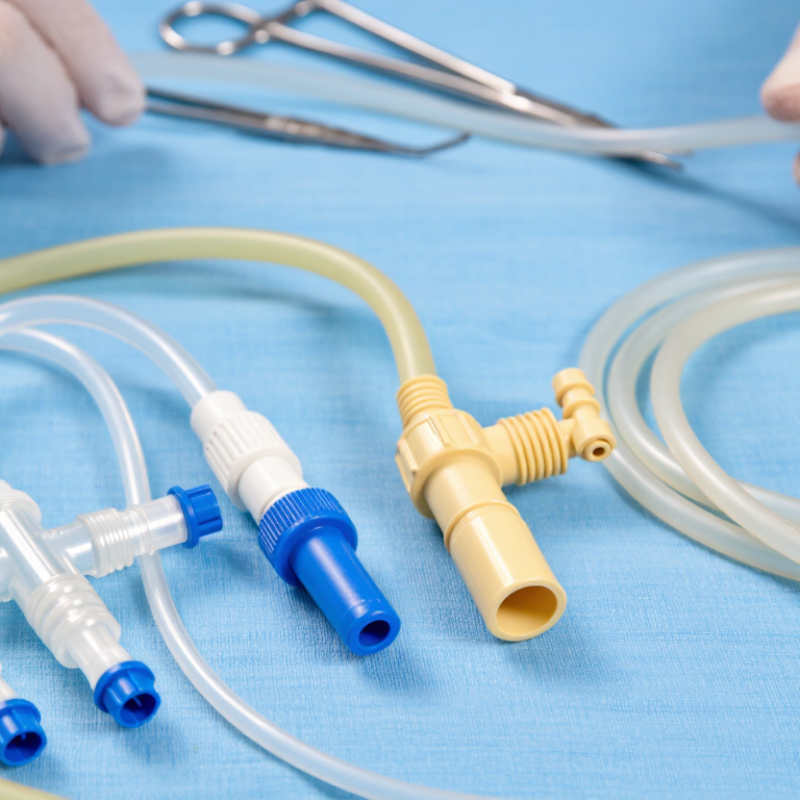
Medical Tube Types and Their Primary Clinical Uses
Medical tubes serve different clinical purposes, and selection should begin with the procedure, not the product shelf. Intravenous catheters deliver fluids, medicines, and blood products. Endotracheal tubes support ventilation when airway protection is inadequate. Nasogastric tubes provide feeding or gastric decompression. Urinary catheters drain the bladder, while drainage tubes remove fluid from surgical spaces.
The risks are measurable. The CDC states that urinary catheters are used in approximately 15–25% of hospitalized patients, making proper indication and removal important. The WHO Global Report on Infection Prevention and Control (2022) estimates healthcare-associated infections affect 7 in 100 acute-care patients in high-income countries and 15 in 100 in low- and middle-income countries. Tube choice should therefore consider material, diameter, length, flexibility, radiopacity, and expected dwell time. A small-bore feeding tube may reduce discomfort, but it can clog more easily. A wider drainage tube may improve flow, yet cause greater tissue irritation.
Clinical teams should verify anatomy, insertion depth, sterility, and compatibility with connected equipment. CDC NHSN surveillance measures device-associated infections per 1,000 device-days, showing why documentation matters beyond insertion. In practice, selection is rarely perfect. Patient movement, secretion thickness, and skin condition can change the safest option. I have seen decisions improve when nurses reassess the tube during every handover, rather than trusting the original plan.
How Tube Design Matches Different Medical Procedures
Medical tubes are designed around specific clinical tasks, not general convenience. Their shape, length, diameter, and materials affect safety during use. An airway tube needs a smooth surface, reliable connectors, and a cuff that supports ventilation without excessive pressure. A feeding tube requires flexibility and a suitable tip for controlled placement.
Drainage tubes often use side openings to reduce blockage near the target site. Their stiffness must balance easy insertion with resistance to kinking. A blood collection tube depends on its internal additive, fill volume, and labeling system. Small details matter. An incorrect additive can affect test accuracy, even when the sample looks normal.
In practice, clinicians should compare the tube design with the procedure, patient anatomy, and expected dwell time. A radiopaque marker can help confirm location through imaging. A sterile package and secure cap can reduce handling risks. However, no design solves every clinical problem. I have seen choices made by habit rather than procedure requirements. That approach deserves review. The instructions for use, compatibility data, and local clinical protocols should guide final selection. Fit matters. So does communication between the procedure team, nursing staff, and laboratory personnel.
Key Materials, Sizes, and Performance Characteristics
Top Medical Tubes for Different Procedures: How to Choose
Material selection shapes safety, flexibility, and chemical resistance. Silicone tubing stays soft at body temperature and suits drainage or long-contact procedures. Polyurethane offers strength with a thin wall, supporting catheters that need a smaller outer diameter. PVC remains practical for short-term fluid delivery, but plasticizer choice and stiffness require review.
According to the WHO Global Report on Infection Prevention and Control (2022), about 7 in 100 acute-care patients in high-income countries acquire at least one healthcare-associated infection. Tubing design cannot prevent every infection, yet smooth inner surfaces and secure connections can reduce avoidable risks.
Size must match flow, pressure, and anatomy. Internal diameter controls flow more directly than external diameter. A narrow tube may reduce trauma, but it can increase resistance and clogging. Larger tubing improves drainage but may feel less comfortable.
Performance testing should examine tensile strength, kink resistance, leakage, extractables, and sterilization effects. ISO 10993-1 recommends a risk-based biological evaluation for patient-contacting materials.
The decision is rarely perfect. A tube that performs well in a laboratory may behave differently after bending, warming, or repeated handling.
Tips:
Compare inner and outer diameters, not “size” alone. Check compatibility with medications, pumps, and connectors. Review manufacturer test data, then verify performance in the actual procedure. When evidence is limited, document the uncertainty instead of assuming the material is automatically safe.
A Step-by-Step Guide to Selecting the Right Medical Tube
Choosing a medical tube requires more than matching a name to a procedure. Start by defining the clinical purpose, such as drainage, infusion, sampling, or airway support. The intended route affects the tube’s shape, length, flexibility, and connector design. Patient age, anatomy, allergies, and expected treatment time also matter.
I once viewed tube diameter as the main decision. That approach was too narrow. Select the smallest suitable size when it can perform safely, while checking flow requirements and blockage risk. Compare the tube material with the medication, body fluid, or laboratory sample. Some materials resist certain chemicals better than others. Confirm sterility, packaging integrity, expiry date, and single-use requirements before opening.
Then examine practical details. Check connector compatibility, depth markings, radiopacity, and securement options. For sampling tubes, verify whether additives could affect test results. For drainage tubes, consider side holes, suction levels, and tissue contact. Always review the current instructions for use and facility protocol. A second trained professional should confirm the choice in higher-risk procedures. Small details can prevent large problems. My own checklist still needs revision when new evidence, equipment, or patient factors appear. Selection should remain a documented clinical decision, not a habit.
Safety, Compatibility, and Quality Checks Before Use
Choosing a medical tube starts with the procedure, not the package color. Blood collection, drainage, feeding, and respiratory procedures require different materials and dimensions. Confirm the tube’s intended use, internal diameter, length, and connection type against the clinical protocol.
Safety checks should happen before opening the sterile pack. Inspect the seal, expiry date, lot number, and tube surface under good lighting. Look for cracks, cloudiness, particles, or flattened sections. A quick visual check is not enough. If packaging feels damp or damaged, quarantine the item and report it through the proper process.
Compatibility deserves equal attention. Check whether the tube tolerates the medication, specimen, temperature, and pressure involved. Some materials may absorb chemicals or become brittle after exposure. Confirm that connectors fit firmly without forcing them. During quality review, verify sterility documentation, traceability, and storage conditions. Keep records when required. Small details matter.
In practice, rushed checks still happen. That is a weakness worth correcting. A tube can appear clean yet fail because its connector is mismatched or its size is unsuitable. Use current instructions for use and approved clinical guidance, then ask a qualified professional when any detail remains unclear. Reliable selection depends on evidence, careful handling, and a willingness to pause before use.
Top Medical Tubes for Different Procedures: How to Choose
Typical adult tube size ranges shown in millimeters. Actual selection must follow the clinical indication, patient anatomy, manufacturer instructions, and local policy.
Safety: Confirm the indication, patient identity, allergies, contraindications, insertion route, and required verification method before use.
Compatibility: Check connector standards, intended fluids or gases, diameter, length, material, and compatibility with related equipment.
Quality checks: Inspect packaging integrity, expiry date, sterility status, tube markings, connectors, and visible defects before opening or insertion.
Reference note: French gauge conversion is 1 Fr = 0.33 mm. Size ranges are commonly used adult reference ranges and are not a substitute for procedure-specific clinical guidance.
FAQS
Match its shape, length, diameter, material, and tip to the clinical task. Fit matters. Consider anatomy, dwell time, connectors, and local protocols.
It should have a smooth surface and reliable connectors. Its cuff must support ventilation without creating excessive pressure. Small design choices can affect patient safety.
A feeding tube needs flexibility and a tip suited for controlled placement. A drainage tube may use side openings to reduce blockage. Their purposes are different.
Internal diameter affects flow and resistance more directly. External diameter influences anatomy, comfort, and possible tissue pressure. Do not judge size by one measurement.
Silicone remains soft at body temperature and may suit longer contact. Polyurethane provides strength with a thinner wall. PVC can support short-term fluid delivery, but stiffness needs review.
A narrow tube may reduce trauma but increase clogging and resistance. A larger tube can improve drainage but feel less comfortable. The balance is not always obvious.
Their additives, fill volume, and labels must match the intended test. An incorrect additive may distort results, even when the sample looks normal. Appearance can mislead.
Sterile packaging and secure caps can reduce avoidable handling risks. Radiopaque markers may help confirm location through imaging. No design removes every risk.
Review tensile strength, kink resistance, leakage, extractables, and sterilization effects. Check compatibility with medications, pumps, and connectors. Laboratory results may not predict every clinical condition.
Compare instructions, compatibility data, and actual procedure requirements. Document uncertainty instead of assuming the material is automatically safe. Habit deserves review.
Conclusion
Choosing the right medical tube is essential for safe and effective clinical care. Different tubes are designed for specific procedures, including drainage, fluid delivery, sampling, ventilation, and infusion. Their structure, flexibility, internal diameter, length, tip design, and connection type should match the intended use. Materials must also be evaluated for biocompatibility, chemical resistance, transparency, sterilization tolerance, and durability. Understanding these features helps healthcare professionals select a tube that performs reliably without creating unnecessary risks.
When considering How to choose medical tubes for different procedures, begin by identifying the procedure, patient requirements, fluid or gas involved, and expected duration of use. Next, confirm the appropriate size, flow performance, flexibility, and compatibility with related equipment. Before use, inspect the tube for damage, contamination, packaging integrity, and accurate labeling. Confirm that it meets applicable clinical specifications and institutional protocols, and always follow professional guidance for insertion, handling, monitoring, and disposal.

 Wigivida Medical